Yurei: much more than a Japanese ghost
Yurei: much more than a Japanese ghost

From chilling kabuki plays to eerie woodblock prints, the image of the Yurei has haunted Japanese culture for centuries. If you’ve ever been intrigued by the spectral figures floating through Japanese horror films or curious about the ancient roots of ghost stories in the East, then you’ve already brushed up against the eerie world of the Japanese Yurei.
Unlike typical yokai—the vast array of mythical Japanese creatures—Yurei are specifically the spirits of the dead who have not found peace. These ghostly figures are central to Japanese folklore, often appearing in tales of vengeance, sorrow, or unresolved emotions.
With increasing interest in yokai meaning and cultural heritage, many people today are rediscovering the ghostly beauty and haunting backstories of these Japanese spirits. So whether you’re researching the Japanese word for ghost, looking for the right Yurei tattoo design, or simply diving into folklore, understanding Yurei gives you a deeper appreciation of Japanese spiritual beliefs.
What is a Yurei: History
So, what is a Yurei exactly? The term «Yurei» (幽霊) translates directly to «faint spirit» or «dim soul» in English. It’s the Japanese word for ghost, but it has a much richer meaning. The concept dates back to the Heian period (794–1185), heavily influenced by Buddhist and Shinto beliefs that emphasized the journey of the soul after death.
In traditional Japanese folklore, when someone dies with intense emotions—whether rage, sorrow, or even love—their spirit may not transition peacefully to the afterlife. Instead, they become a Yurei ghost, lingering in the physical world. These spirits are stuck between realms, haunting specific people or places until they can complete their unresolved business.
Unlike general yokai, which can be whimsical or monstrous Japanese creatures, Yurei represent a more personal and tragic element of the supernatural. Their stories are usually deeply human, rooted in betrayal, loss, or injustice. They’re not always evil, but they are nearly always suffering.
The Yurei meaning is thus intertwined with emotional unrest. From a historical perspective, their presence in literature and oral tradition reveals how the Japanese view life, death, and the emotional ties that outlive the body.
Types of Yurei
Not all Yurei are created equal. There are several well-known Japanese ghost names and types, each with its unique motivation and haunting style. Here are the most prominent:
-
Onryō (怨霊) – The most famous type of Yurei, the Onryō is a vengeful spirit. Think of Sadako from «The Ring.» These Japanese ghosts return from the dead to exact revenge on those who wronged them in life. They’re powerful and terrifying.
-
Ubume (産女) – A maternal ghost, often appearing as a woman who died during childbirth. These Japanese spirits may haunt a place in search of their lost child or to protect the newborn they left behind.
-
Funayurei (船幽霊) – Ghosts of those who died at sea. These spirits are known to appear on ships, either asking for water or trying to drag sailors down to join them.
-
Zashiki-warashi (座敷童子) – While more of a yokai, these childlike house spirits blur the line between ghost and folklore being. They’re mischievous but usually bring good fortune.
-
Goryō (御霊) – Noble or high-ranking spirits wrongfully killed. Their vengeful nature is often pacified through rituals, temples, and offerings.
These categorizations show how nuanced Japanese yokai culture really is. While Western ghosts are often generalized as spooky or evil, Japanese Yurei are categorized by their life stories, emotions, and causes of death.

Appearance
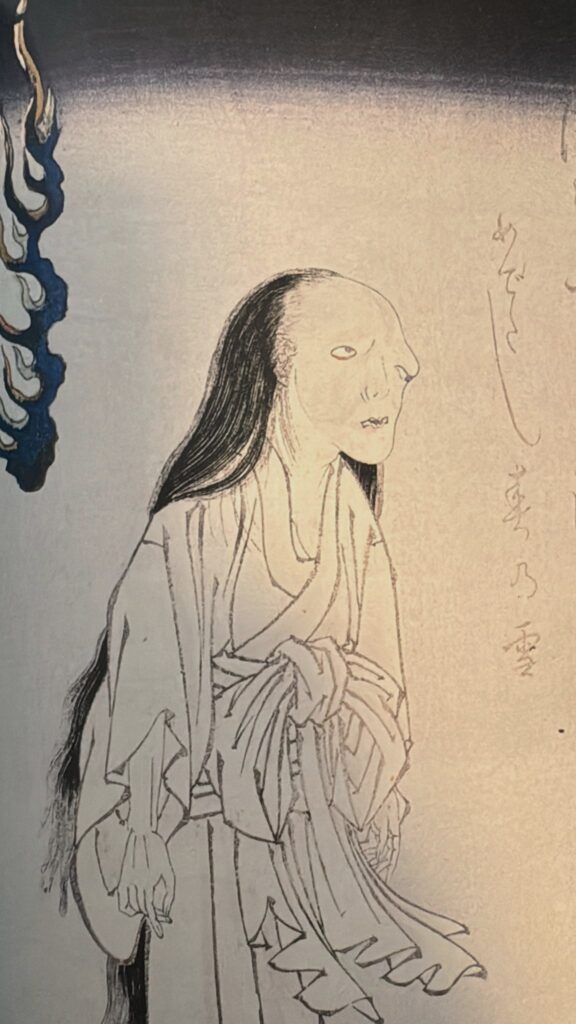
Yurei are instantly recognizable thanks to centuries of consistent artistic depiction. If you’ve seen a pale figure with long black hair, wearing a white burial kimono—you’re likely looking at a Yurei. This image has been repeated so often that it’s become an archetype not only in Japan but globally, thanks to horror films and manga.
The white kimono they wear is a traditional funeral garment, emphasizing their connection to death. Their hands usually dangle lifelessly from the wrists, sometimes held limply in front of the body, and their feet rarely touch the ground—reinforcing their ghostly, ethereal nature.
You may also see a triangle-shaped piece of cloth called a «hitaikakushi» on their forehead, used in traditional funerals to signify the soul’s passage. These small but powerful details make Yurei stand apart from other Japanese yokai or supernatural figures.
In tattoos, this traditional look is often stylized with flowing hair, intense facial expressions, and floating elements. A Yurei tattoo can be both haunting and beautiful, often chosen for its deep symbolism of unresolved emotion and spiritual power.
Yurei in Japanese Art
Yurei have long been a staple in Japanese art, particularly during the Edo period (1603–1868). Artists like Katsushika Hokusai and Utagawa Kuniyoshi created woodblock prints depicting these eerie spirits. Their works added visual language to Yurei stories—ghosts with wild hair, dark eyes, and translucent bodies floating above the ground.
In traditional Kabuki theater, Yurei are portrayed with exaggerated features—long sleeves that drag on the floor, sorrowful expressions, and haunting wails. These visual cues are crucial in helping the audience recognize that they are witnessing a tale involving the supernatural.
This artistic tradition has continued into modern media. Manga, anime, and horror films frequently draw on the same visual tropes established hundreds of years ago. Even video games like “Fatal Frame” and movies like “Ju-On” use the classic Yurei archetype, keeping these ghosts relevant in pop culture.
These depictions serve as more than just entertainment. They are a living archive of Japanese folklore, reinforcing the emotional complexity and cultural resonance of Yurei in every generation.
Yurei Today
While deeply rooted in the past, Yurei continue to evolve in modern Japan. They’ve made their way into fashion, literature, games, and even spiritual practices. Urban legends circulate around schools, bathrooms, and remote forests, often echoing traditional Yurei tales but with a contemporary twist.
In a society where old and new coexist, Yurei act as a cultural bridge. You might see someone getting a Yurei tattoo not just for aesthetics but as a symbol of grief, emotional depth, or even defiance. Others may explore the yurei name meaning or the stories behind them as a way of connecting with ancestral traditions.
Today’s ghost hunters, folklore enthusiasts, and spiritualists often turn to Yurei as symbols of unresolved history. They remind us of the importance of rituals, memory, and emotional closure. Whether you’re exploring Japanese ghosts for art, storytelling, or spiritual insight, the Yurei remains one of the most iconic and emotionally charged figures in Japanese yokai lore.